· Blenders International · Pairing Notes · 5 min read
Pairing notes — Indian single malt and the ideal companion
Indian single malts are tropical-aged, high-ABV expressions. The companion they need is precise. Here is the science behind our Plezure formulation.
Key takeaways
- Indian single malts are tropical-aged and typically high-ABV, producing dense fruit and spice with rapid oak interaction.
- These intense expressions need a precise, low-mineral companion — generic still or cocktail-grade sparkling water dulls or distorts them.
- Plezure is formulated for this profile: a 1:1 starting ratio opens the mid-palate without flattening the finish.
The Indian single malt category is unlike any other whisky tradition in the world. That is not marketing language — it is a material fact of climate, oak, and distillation style that produces expressions with a distinct character profile. And that profile demands a specific companion.
What makes Indian single malt different
Three factors define the category:
Tropical aging. At Goan and south Indian latitudes, average temperatures are 25–35°C and humidity is high. Scotch ages at 10–15°C. This temperature difference accelerates extraction from oak by a factor of three to four — a ten-year Indian single malt may have achieved the wood interaction of a thirty-year Scotch.
Rapid extraction means more tannins, more oak character, more caramelisation. It also means higher evaporation through the barrel. The Angel’s Share (the portion of whisky lost to evaporation annually) in Scotland is around 2%. In Goa, it can be 8–10%. What remains is concentrated.
Higher bottling ABV. Because of this concentration, Indian single malts are typically bottled at higher ABV — 46% is common, 50%+ is not unusual for premium expressions. Amrut Fusion comes in at 50%. Paul John Mithuna at 58%. At these ABVs, adding water is not optional. It is necessary for the spirit to show its best.
Flavour architecture. The combination of tropical oak and Indian barley creates a profile dominated by tropical fruit (mango, banana, overripe papaya), alongside intense vanilla and caramel from accelerated oak extraction. Underneath this, good Indian malts have a structural complexity — spice, leather, dried fruit — that the fruit notes can obscure at cask strength.
What a companion needs to do
Given this profile, the ideal companion has four jobs:
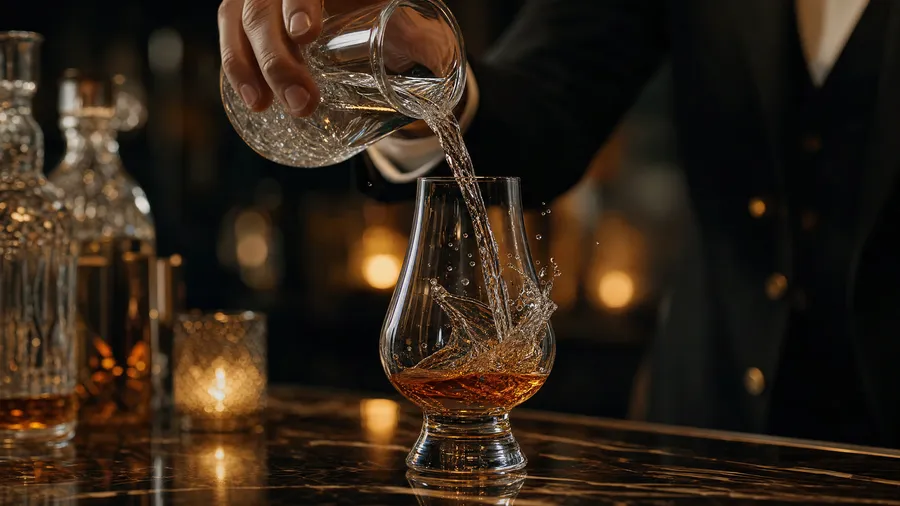
1. Lower the ABV without drowning the spirit. At 1:1 ratio (whisky to water), a 50% ABV expression drops to approximately 25% ABV — a comfortable drinking strength where the alcohol stops being a barrier and the flavour opens.
2. Not add competing flavour. High-calcium water will interact with the tannin profile and add bitterness. High-sodium water will flatten the tropical fruit. The companion must be neutral — near-zero mineral in terms of sensory impact.
3. Release the aromatics. Indian single malts are aromatic powerhouses but the aromatics can sit below the surface at high ABV. Lowering the ethanol concentration with still water weakens the bonds holding volatile compounds — specifically the esters responsible for the tropical fruit character — and lets them reach the nose.
4. Not overwhelm the finish. The finish of a good Indian single malt is long and warming, with spice notes developing 30–60 seconds after the sip. An aggressive companion — high TDS, or the carbonic bite of a sparkling water — erases this entirely. The companion should enhance the first impact and then get out of the way.
The Plezure formulation
We developed Plezure’s specification through direct testing against Paul John Brilliance, Amrut Fusion, and Rampur Double Cask — three contrasting expressions that together cover the main stylistic variants of the Indian single malt category.
The 1:1 ratio was selected because it reliably opens the aromatic profile of all three expressions without closing the finish. At 1:1, a 46% ABV expression reaches 23% — below the threshold where ethanol is the primary sensory experience and the flavour complexity can be perceived clearly.
Plezure is still, not sparkling. There is no carbonic bite to mask the spice notes in the finish — the dilution does the work of releasing the fruity esters, and the water then gets out of the way.
The TDS below 50 mg/L — specifically targeting sodium below 5 mg/L and calcium below 8 mg/L — ensures that the mineral profile of the water makes no perceptible contribution to the flavour. In blind panel testing, tasters could not distinguish Plezure-diluted whisky from the same whisky diluted with ultra-pure laboratory water. That is the benchmark: invisible, helpful, faithful to the spirit.
Recommended serving for key Indian expressions
Paul John Brilliance (46% ABV) Ratio: 1:1 (equal parts whisky and water) to fully open the coastal citrus and vanilla notes. Add the water gradually and taste as you go. Use Paul John Luxury Blended Water if available.
Amrut Fusion (50% ABV) 1:1. The peat component (from Scottish barley) responds well to water — phenolic compounds migrate to the surface and the tropical fruit lifts simultaneously.
Rampur Double Cask (45% ABV) 1:1, added slowly. This expression is already well-integrated — introduce the water gradually so it does not flatten the careful interplay of American and French oak.
Paul John Mithuna (58% ABV cask strength) This expression demands water. Work toward 1:1, adding gradually. At cask strength, the ABV is a barrier; brought down to drinking strength, the single malt complexity becomes the main event.
Blenders International · Pairing Notes series